the basic operate
一级指针的典型用法 : 数组 、
字符串在C语言中使用字符数组来模拟字符串
C语言中的字符串是以’\0’结束的字符数组
C语言中的字符串可以分配于栈空间,堆空间或者只读存储区
字符和字符数组:
int main(int argc, char * * argv)
{
char buf[120]= "hello";
printf("%s", buf);
char buf2[120] = {'h','e','l','l','o'};
printf("%s" , buf2);
char buf3[] = "world";
printf("%d , %d" , strlen(buf3) , sizeof(buf3));
return 0;
}
数组或指针操作字符串:
int main()
{
char buf[10] = "hello";
for(int i = 0; i<strlen(buf) ; i++ )
{
printf("%c" , buf[i]);
}
printf("\n");
char * p = buf; //指向 buf[0]的地址不是数组!!!
for(int i = 0; i<strlen(buf); i++)
{
printf("%c", *(p+i));
}
return 0;
// hello
// hello
}
buf[i] --> buf[0+i] --> *(buf+i)
中括号的本质:
buf5[10];
buf5 = buf5 + 1
buf5 是一个常量指针。编译器这么做的。
为什么这么做?
如果进行栈的内存回收 , 如果允许 常量指针buf5 修改地址 则很难在修改之后找到buf 的地址对这段内存进行析构。
为可保证 数组 这块内存首地址的安全 buf5 是一个常量 , 传到函数中也是常量指针地址不能轻易改变。
这就是为什么 指针 p = p+1; 可以 ; buf5 = buf5 +1;不可以;
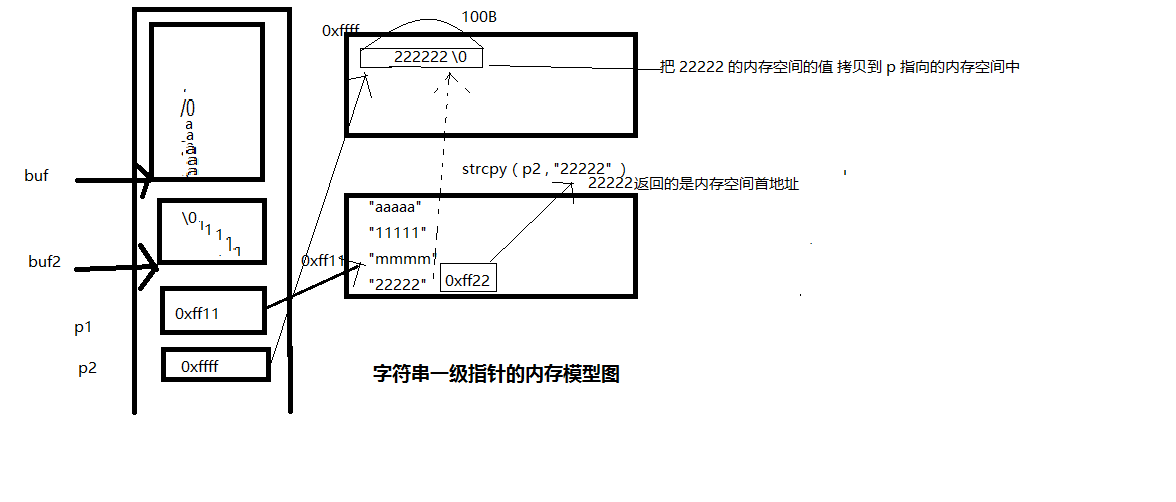
字符串一级指针的内存模型图
int main()
{
char buf[20] = "aaaaa";
char buf2[] = "11111";
char * p1 = "mmmmm";
char * p2 = malloc(100);
strcpy(p2,"222222");
free(p2);
return 0;
}
-----
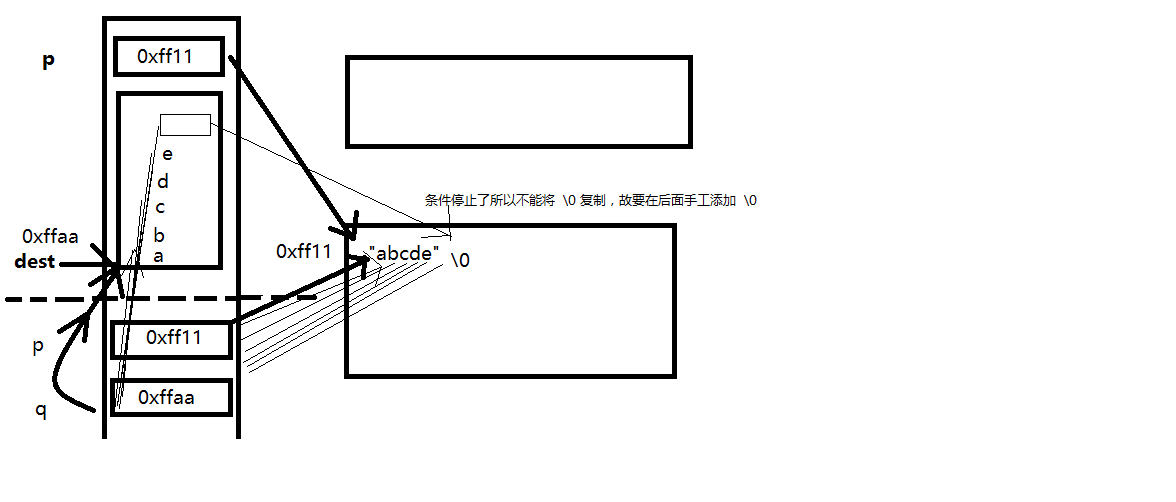
字符串做函数参数业务模型和测试案例分开:
void cpstr(char * p , char * q)
{
for(; *p != '\0'; p++, q++ )
{
*q = *p;
// *q++ = *q++; 先 *q = *p; 再 p++, q++
}
*q = '\0';
}
/* 改进不用手动添加 \0
while( (*q = *p) !=0)
{
p++;
q++;
}
*/
/*
while( (*q++ = *p++) !=0)
{
;
}
*/
/*
while( (*q++ = *p++))
{
;
}
*/
int main()
{
char * p = "helloworld";
char dest[100];
cpstr(p , dest);
printf("dest: %s" , dest);
return 0;
}
业务模型和测试案例未分开:
int main004()
{
char from[] = "helloworld";
char to[20];
int i;
for(i = 0; *(from+i) != '\0'; i++ )
{
*(to + i) = *(from+i);
}
to[i] = '\0';
printf("%s\n" , from);
printf("%s\n" , to);
return 0;
}
改进代码
void cpstr(char * p , char * q)
{
//在形参中另存一份 辅助变量 不要轻易改变形参的值
char * p = tmp_p;
char * q = tmp_q;
//所以不会影响主调用函数指针的指向。
for(; *p != '\0'; p++, q++ )
{
*q = *p;
// *q++ = *q++; 先 *q = *p; 再 p++, q++
}
*q = '\0';
}
/* 改进不用手动添加 \0
while( (*q = *p) !=0)
{
p++;
q++;
}
*/
/*
if( p ==NULL || q= NULL)
{
return -1;
} //添加判断
// -> while( (*q++ = *p++) !=0);
while( (*q++ = *p++) !=0)
{
;
}
*/
/*
while( (*q++ = *p++))
{
;
}
*/
int main()
{
char * p = "helloworld";
char dest[100];
cpstr(p , dest);
printf("dest: %s" , dest);
return 0;
}
项目开发中的字符串模型
strstr _ while do_while
posted on 2017-07-13 12:58
silvercell 阅读(124)
评论(0) 编辑 收藏 引用 所属分类:
c raise